Gray Blending vs. Full Gray Coverage: Which Is Right for You?
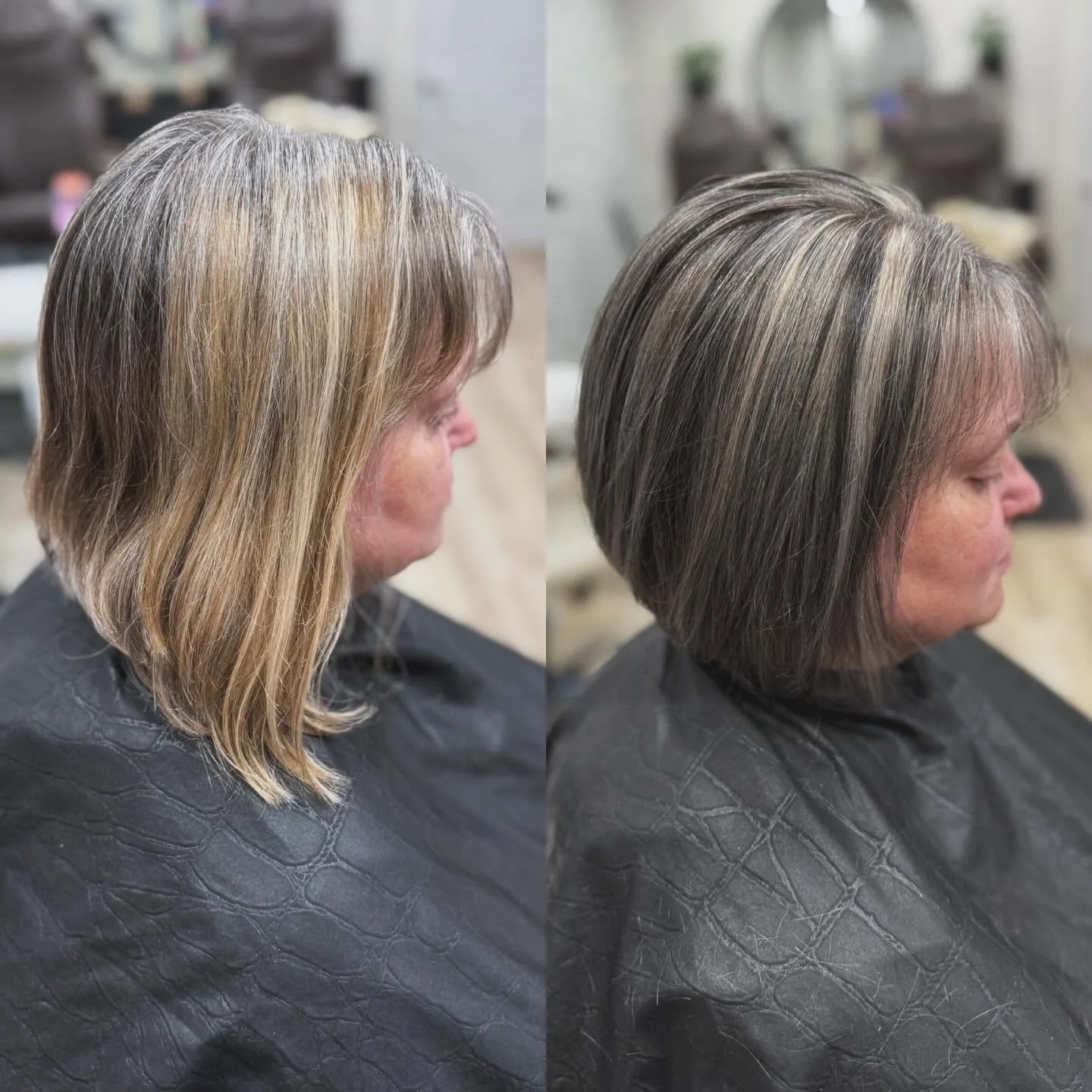
The guest has about 30–40% silver-gray; the rest is cool brown. She wanted less upkeep without looking frumpy. I added bold lowlights and balanced silvery highlights throughout so it grows out softly, naturally, and intentionally styled.
This is a conversation I'm having more and more often in my chair...
Gray blending or gray coverage? What's the difference? What does it actually mean? And how do you know which one is right for you?
The truth is, there isn't one right answer.
It simply comes down to when (or if) you're ready to stop chasing every single gray hair.
Now before you panic—this does not mean you're "going gray." It simply means you're no longer trying to hide every sparkle that naturally grows in.
What is Gray Coverage?
For most women, gray hair first becomes noticeable around the temples and crown—unfortunately, the areas everyone sees first.
If seeing that harsh line of regrowth drives you crazy, you're probably scheduling root touch-ups every 4–7 weeks.
Here's the reality, though...
Around the two-week mark, those little silver sparkles usually begin peeking through. By weeks three and four, your roots are making their appearance whether you like it or not.
At your hair color appointment, your stylist applies permanent color directly to your new growth, occasionally refreshing the ends, and then you repeat the process every few weeks to keep the gray completely hidden. That's what we call gray coverage.
For many women, this is exactly what they want—and that's perfectly okay.
What is Gray Blending?
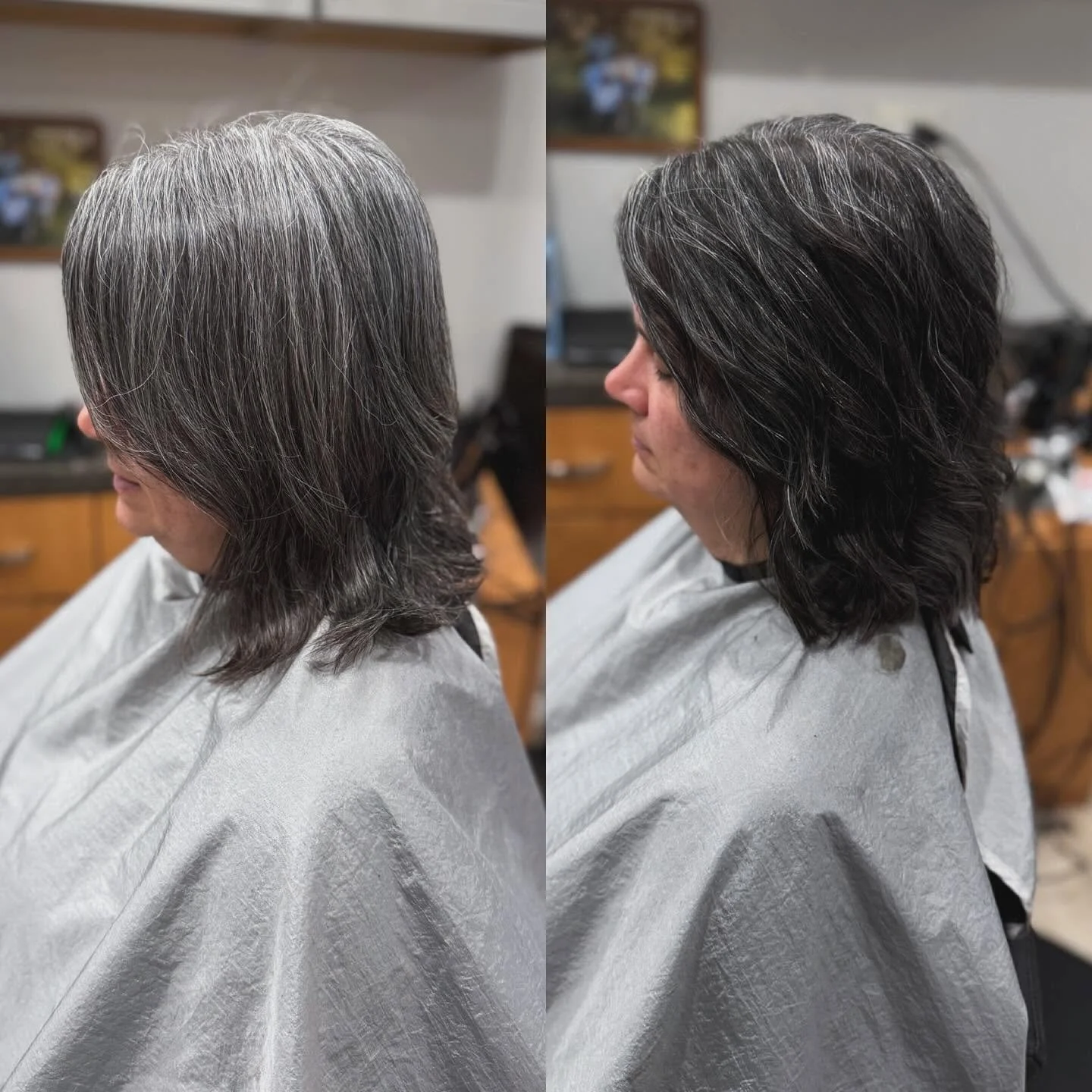
This guest wanted to match her natural dark brown with a lowlight. She’s nearly 80%-90% gray at the top of her head, so doing a lowlight was a great way to allow her natural grays act as her highlights!
Gray blending is a completely different approach.
Instead of trying to erase every gray hair, your stylist works with what's naturally growing in.
A trained stylist will evaluate your gray percentage and determine whether highlights, lowlights, or a strategic combination of both will create the softest, most natural-looking result. Placement matters just as much as the color itself. The goal is for your hair to grow out beautifully, without that harsh line of regrowth.
The final step—toning and neutralizing unwanted warmth—brings everything together and creates a seamless blend.
Gray blending is often mistaken for "just getting highlights," but depending on the percentage of gray you have and your desired result, it involves much more strategy than traditional foil placement.
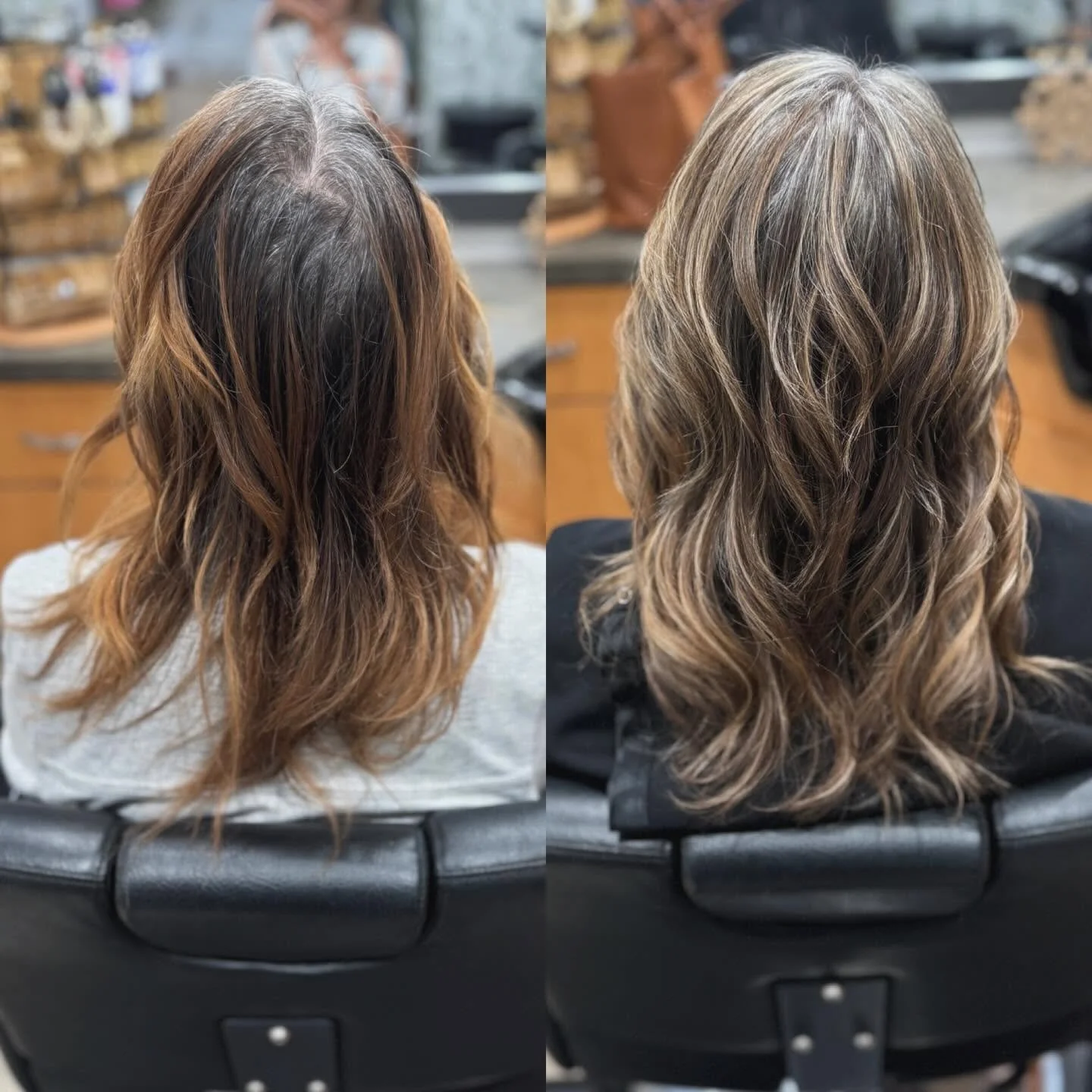
The front of her head (temples and crown) has about 75% gray. We did a highlight/lowlight blend with a neutralizing tone to complete her service. Not only was her gray much less noticeable but she now is able to come in for just a toning service every 10-12 weeks!
The Biggest Misconception
One of the biggest myths I hear is:
"If I start gray blending, I'm giving up. I'm embracing aging. I'm going to look frumpy."
Nothing could be further from the truth.
Gray blending isn't about looking older.
It's about creating freedom.
Freedom to stretch appointments farther apart.
Freedom to schedule color because you want to, not because your roots have made the decision for you.
And here's the best part...
Gray blending isn't a lifetime commitment.
If you try it for a season and decide you'd rather have more coverage again, you absolutely can. Hair color isn't permanent in that sense—you always have options.
So... Which One Is Right for You?
If seeing even a little gray makes you cringe and you don’t mind visiting your stylist every 4-7 weeks, gray coverage may still be the perfect choice!
If you're tired of the constant maintenance and want softer grow-out with more flexibility between appointments, gray blending might be exactly what you've been looking for.
Neither choice is right or wrong.
Whether you choose to cover every silver strand or let a little of your natural sparkle shine through, my goal is the same: helping you find a color plan that fits your lifestyle, your maintenance preferences, and the way you want to feel when you look in the mirror.